About Me, Multiple Sclerosis

I Thought MS Would Take My Legs

Five years ago today, I had a conversation with my partner in crime.

I had been having extreme difficulty walking for a few days. She called me and said she was coming to get me and take me to the emergency room.

I told her, “Not today. Let’s go in the morning.”

She said okay.

That night, I lay in bed wondering what could possibly be causing me to have so much trouble walking for so long. I remember it was a Friday. Looking back now, I wonder: What was I thinking?

I had already been to urgent care that day. They had no idea what was going on, and I could barely get myself there.

The next morning, we went to the emergency room. After several MRIs and other tests, I was diagnosed with Multiple Sclerosis.

I couldn’t believe it.

I thought MS wasn’t genetic. My sister already had Multiple Sclerosis, so surely what was happening to me had to be something else.

But no.

Although MS allegedly isn’t directly inherited, somehow we BOTH have MS.

I thought my life was over.

I thought I was destined to be in a wheelchair. Disabled. Dependent on other people.

Because that was the image of MS I had seen.

I remember meeting Dr. Dyke, the neurologist on duty in the emergency room. He was such a nice guy. He ended up becoming my neurologist and remained my doctor until I moved away from DFW.

My BFF came to the emergency room and was there when I received the diagnosis. After that, she came to every appointment with me for years.

I don’t think I fully appreciated then how much care that required. She took time off work to attend those appointments with me. Other than my son, I had no family in DFW.

Without my BFF, I would have been alone.

I received steroids in the emergency room. It took a few hours, but eventually I was able to walk out without incident.

And then, just a few days later, my partner in crime, 18 friends, and I went to Tulum, Mexico, for a friend’s birthday trip to paradise.

Because apparently a life-changing diagnosis wasn’t going to stop the itinerary.

I told my friend Ivy, the birthday girl, about my diagnosis. She and everyone else on that trip watched over me with such kindness.

Before leaving, I bought a packable cane just in case I needed it.

Five years later, I still keep that cane in my car.

I remember calling my mom the day after my diagnosis to tell her. I didn’t want to tell her on August 21 because that was her birthday, and I didn’t want to tell my Daddy over the phone.

Some time later, my parents came to visit, and I told my Daddy that I had MS too.

He cried.

Not just a tear.

His initial reaction was deeply emotional.

And somehow, I found myself comforting him about my diagnosis.

The diagnosis also made other things in my life make sense.

For years, I had issues with my bladder. I couldn’t always hold it. I had accidents. I have memories of running desperately to bathrooms and even peeing on the side of the car.

It was just something I laughed about.

My friends knew that if I said I had to go, everyone needed to stop what they were doing and make sure I got to a restroom.

Over the years, I remember searching bladder incontinence online and seeing very clearly that one possible cause was Multiple Sclerosis.

But it never clicked.

Not until I ended up in that emergency room.

Today, I wear incontinence underwear every day.

Actually, I wear two.

Just in case.

And then there are the changes people can’t see.

The mild cognitive impairment.

Words don’t come to me the way they used to.

I used to be quick. I could pull something someone said earlier in a conversation and turn it into a funny callback. I could jump into conversations naturally. I could think of questions. I could keep the conversation going.

Now, I often sit quietly while other people are talking.

I listen.

I observe.

But sometimes I can’t figure out how to break into the conversation. I don’t have anything to add because the words simply aren’t there. Questions don’t pop into my brain the way they once did.

I go to ChatGPT for conversation starters more often than I’d like to admit.

When I was diagnosed, I thought the worst thing MS could take from me was my ability to walk.

Five years later, I realize I was wrong.

It took some of my words.

And that is an invisible pain I never knew to fear.

Not having the words has created a different kind of loneliness.

I am here.

People are around me.

I want to connect with them. I want to join the conversation. I want to explain what is happening inside of me.

But sometimes I simply can’t find the words to do it.

And losing my words hurts because it feels like I lost a piece of myself.

If MS only affected my walking, people could see me struggling.

They might slow down.

Offer me an arm.

Find me somewhere to sit.

Understand why I’m tired.

But nobody can see me searching for a word.

Nobody can see the thought that was there a second ago disappear before I could grab it.

Nobody can see how lonely it can feel to have something to say and not be able to find the words to say it.

Five years ago, I lay in bed wondering why I couldn’t walk.

I had no idea that five years later, I would be grieving something I didn’t even know I could lose.

My words.

DDC
Standard
About Me, Mental Health, Multiple Sclerosis

What Happened To Me?!?!

If DDC 2021 met DDC 2026, she probably wouldn’t recognize her.

She’d spend the first few minutes asking questions.

What happened to your spark?

Why don’t you laugh as much anymore?

When did you stop planning girls’ nights and random Tuesday adventures?

Why do you stay home so much?

When did you stop blogging?

Why are you so quiet?

And then she’d ask the question that hurts the most.

“What happened to me?”

I wish I had a simple answer.

I could tell her that Multiple Sclerosis happened.

Depression happened.

ADHD happened.

Stress happened.

Perimenopause happened.

Maybe even years of carrying more than I realized happened.

But none of those answers would fully explain why she no longer recognizes herself in me.

The hardest part hasn’t been learning to live with MS.

The hardest part has been grieving the woman I used to be while trying to become someone I never expected to meet.

I miss the way my brain used to work.

I miss finding the perfect word without searching for it.

I miss making people laugh with a callback to something they said an hour earlier.

I miss walking into a room already thinking about how to bring people together.

I miss blogging because the words used to arrive faster than I could type them.

Now they often feel trapped somewhere just beyond my reach.

People say Multiple Sclerosis is an invisible disease.

Sometimes that’s true.

Most people don’t see the battle happening inside my mind.

They don’t see me searching for a word that used to come effortlessly.

They don’t see the grief that comes from feeling like a stranger inside your own life.

I used to describe myself as outgoing.

Effervescent.

Now I spend many evenings at home with an audiobook.

I’ve noticed something strange about that.

I can almost measure my isolation by the number of books I read.

The higher the number climbs, the quieter my life has become.

It’s only July, and I’ve already finished 28 books.

Books haven’t replaced people.

They’ve simply kept me company.

I’ve stopped blogging.

I’ve stayed in a job I’m afraid to leave because I no longer trust my own abilities the way I once did.

Little by little, fear has made my world smaller.

Last week I met another woman with MS at physical therapy.

She was using a walker.

I only said hello.

Later, I wondered if I wasn’t avoiding her at all.

Maybe I was avoiding the fear she represented.

Or maybe I was avoiding the grief we would’ve recognized in each other without saying a word.

Today, though, I decided to write.

Not because the words suddenly came back.

They didn’t.

I wrote because I was tired of waiting until everything felt normal again.

Maybe this is what hope looks like now.

Not pretending I’m the woman I was in 2021.

Not believing I’ve lost her forever either.

Just trusting that somewhere underneath the grief, the doctor’s appointments, the diagnoses, and the fear…

I’m still here.

Maybe DDC 2021 wouldn’t recognize me right away.

But I hope if she stayed awhile, she’d still recognize my heart.

And maybe…

she’d remind me that it’s okay to keep becoming.

DDC

Lesson: Grief isn’t limited to losing people. Sometimes the hardest grief is mourning the version of yourself you thought you’d always be. Healing begins when you stop waiting to become your old self and start giving your present self permission to have a voice.

Question: Have you ever grieved a version of yourself that no longer exists? What helped you begin accepting—and even appreciating—the person you’re becoming?

Standard
About Me, Mental Health

Cloudy With a Chance of Heavy Rain

If my emotional state had a weather forecast today, it would read:

Cloudy with a chance of heavy rain.

From the outside, the clouds don’t always look threatening. Most people see me at work. They see me smile. They see me answer emails. They see me show up.

What they don’t see is that it takes me nearly an hour after waking up just to convince myself to get out of bed.

The hardest part of my day isn’t work.

It’s preparing myself to face it.

People assume I’m okay.

I’m not.

Lately, I’ve been grieving someone who is still alive—myself.

I miss the version of me who woke up excited about life. The woman who was optimistic about the future. The one who believed there was always something to look forward to.

I don’t know exactly when she became so hard to find.

Living with multiple sclerosis has changed me in ways that are obvious and in ways that are invisible. Most people notice when my body is tired.

They don’t notice when MS steals my words.

When I know exactly what I want to say but can’t find it.

When a conversation becomes a search party for vocabulary that used to come effortlessly.

Depression has its own voice.

It whispers that I’m doomed.

It tells me this is as good as life will ever get.

It makes me question whether I’ll ever feel like myself again.

Sometimes I wonder if people understand that this isn’t just sadness.

It’s disconnection.

It’s looking in the mirror and feeling like you’re staring at someone you recognize but don’t quite know anymore.

If my body could speak, I think it would say only one word:

Help.

And yet…

There are still moments.

The sound of Mason laughing.

Showing up for work, even when every part of me wants to stay in bed.

Holding on to the smallest hope that my future self is waiting somewhere ahead, ready to tell me:

Everything is going to be alright.

I don’t know when this season will end.

Right now, everything feels hard.

Everything.

But maybe healing doesn’t begin when the clouds disappear.

Maybe it begins when we finally tell the truth about the weather.

Today, my forecast is cloudy with a chance of heavy rain.

And for today, telling the truth about that is enough.

DDC

Lesson: Some days the goal isn’t to find the sunshine. Some days the goal is simply to stop pretending it’s sunny. There is courage in naming the storm, and sometimes that’s the first step toward seeing the clouds begin to part. 

Question: What keeps you going when you can’t see the sun? 

Standard
Chapter 2

44

On Sunday, November 23, 2025, I turned 44 years old. And if I’m being straight with you—this past year has been… heavy.

Coming home as an adult is complicated. You return to familiar streets and familiar people, but life doesn’t rewind just because you did. Rebuilding isn’t automatic. It takes intention, self-awareness, and the courage to face the parts of your life that feel empty.

I walked back into Louisiana with a loose plan:

  • find a stable income 
  • find a church home 
  • find a Toastmasters meeting.

 A decent start, but not nearly enough for the life I need.

Even though I know I’m a person who thrives on community, laughter, conversation, and shared space, I didn’t create a plan to nurture connection. I didn’t set expectations for maintaining old relationships or building new ones. In the back of my mind, I kept imagining friendships just falling into place—like they used to. People popping in, inviting me out, recreating the same spontaneous warmth I once felt in Texas.

But life doesn’t recreate the past. Not without effort. Not without intention.

I declared 2025 my “Year of Connection,” but looking back, it wasn’t a year of connection. It was the year that revealed how deeply I craved connection—how much I missed feeling woven into a community. A year that showed me the difference between wanting connection and actually building it. That realization forced me to get honest about my lack of action.

Craving connection without specific action leads nowhere. And the truth is, my cravings don’t matter if my actions don’t match them. I’ve been in a self-induced isolation for so long that I almost forgot how to be a friend and how to connect. Realizing that made me see just how much I’ve been missing real closeness.

I want connection. Real connection. The kind that looks like weekly calls, occasional brunches, random Tuesday hangouts, sitting in someone’s living room talking about life. I’m not craving quick, empty check-ins. I’m craving meaningful relationships that naturally include those small moments — the shared posts, the random texts, the tiny touchpoints that make life feel lighter and more human.

As I step into 44, I know exactly what I want this year to mean:
The year I walk out of isolation.
The year I choose connection with intention.
The year I return to spiritual grounding and reconnect with the church in a real, committed way.
I’m naturally a dramatic person. I don’t need 44 to be dramatic. I just need it to be deliberate.
A quiet turning toward community. A gentle re-entry into belonging. A reflective acknowledgment that I’m ready to live again—not just exist.

And this year, I’m choosing connection on purpose.

DDC

Lesson: Oh yes it’s time. Connection time! I’m coming out of isolation and into my connected era. Ready or not. Here I come! 

Question: So . . .  where do I start? 

Standard
About Me, Humor, Love Life

The Speech I Should Have Given

My BFF got married this weekend at a beautiful, love-filled wedding — the kind of day that feels like a movie, where everything and everyone is glowing, and you can feel love in the air like confetti.

I told her that I wanted to be on program at her wedding. Her response? “There’s no program, but you can speak at the reception.” Somehow, I heard that as a maybe. Not exactly the guaranteed microphone moment I envisioned.

Still, I prepared — because that’s what best friends do. I spent the weeks leading up to the wedding studying YouTube speeches, jotting down notes, and even consulting ChatGPT (yes, I had AI assist with my emotions — don’t judge). I wrote a few sentences that I thought might capture our friendship — just in case the opportunity came up.

Then came the reception. The music was perfect, the love was loud, and the energy was everything. At one point, Sharecker walked over to me and said, “It’s almost time for speeches.”

And I froze. Like a deer in headlights.

She must’ve noticed because she immediately offered, “You don’t have to if you don’t want to.”

But of course I wanted to.

I reached for my phone to review the notes I’d so carefully prepared — and right then, my phone screen went black. Dead. No charger in sight.

So I did what best friends do when life doesn’t go according to plan — I spoke from the heart.

I stood up, nerves shaking, voice cracking, and said what I could remember: that I loved her deeply, that I was proud of her, and that seeing her so happy filled me with joy. There were laughs, there were tears, and it felt like the right kind of imperfect — the kind that’s real.

But now, with my 27” monitor, full battery, and all the words that escaped me that night — here’s the speech I should have given:


The Speech 

Good evening, everyone. I’m Danielle Denise Clark, and I have the honor of being best friends with the beautiful bride, Sharecker.

We met riding bikes in middle school, and from the very first moment, I knew I needed her in my life for the rest of my life.

Over the past 30 years, Sharecker has always been love in motion. With acts of service as her love language, she has shown up for me in every way imaginable — physically, emotionally, spiritually, and wholeheartedly.

We’re quite the opposites, too. I can be loud, over the top, and a little extra — while she’s calm, reserved, and effortlessly cool. But that balance has always been the heartbeat of our friendship.

Sharecker is generous with her spirit, steady in her presence, and intentional with her words. She doesn’t just talk about love — she lives it.

And today, watching her marry Charles — the man who makes her feel safe, seen, and protected — felt like witnessing love find its home.

So here’s to Sharecker and Charles:
May your marriage be filled with joy, understanding, forgiveness, and friendship.
May you continue to choose each other everyday, again and again, in both the ordinary and extraordinary moments that make up your life together.

And in the words of a great poet, Nicki Minaj:
“It’s a celebration every time we link up. Greatness is what we are on the brink of. I wish I could have this moment for life”

Cheers to the Sellers — to love, laughter, and a lifetime of togetherness. 

DDC

Standard
About Me, Chapter 2, Mental Health, Multiple Sclerosis

Heavy Legs, Heavy Thoughts

Lately, I’ve been noticing my legs in a way I never really have before. Noticing them not in appreciation, but in awareness—because sometimes they feel heavy, stiff, or reluctant to move.

Most mornings, it takes extra effort just to get going. I wake up and my legs feel like they’ve forgotten how to function, how to step. Those first few minutes out of bed I shuffle around like a baby calf fresh out of the womb—awkward, shaky, unsteady. Eventually, the stiffness eases after some walking around, but it never disappears completely. It lingers, reminding me of something I’d rather forget.

I think back to August 2021, the month I was first diagnosed with Multiple Sclerosis. That flare-up announced itself loudly: it was nearly impossible to walk. I spent about a week struggling before I finally went to the emergency room, where I heard the words that changed everything.

But even before that, there were signs. Earlier in 2021, while in Chicago, I had another flare-up. I could barely walk. I just wanted to sit down wherever I was. My legs dragged under me like they didn’t belong to me anymore. To anyone watching, I probably looked like a drunk person weaving down the street, but really I was fighting my own body with every step.

Sometimes, moving my legs feels like an act of sheer willpower. Each step is a reminder that I can still move, even if it takes more energy than it should. And I can’t help but wonder—am I simply getting older, or am I slowly losing my mobility?

Every case of MS is different. I know this. I’ve been told this. But knowing doesn’t stop me from comparing myself to my sister, who also lives with MS. Her journey has been unimaginably hard, and when I see her struggle, I can’t help but feel fear tighten its grip on me. I am terrified that one day, I too won’t be able to walk and that terrifies me. 

I don’t have answers. I don’t have solutions. What I do have is this moment, these words, and these legs that still, somehow, carry me forward. And for now—that has to be enough.

DDC

Question: What’s something in your life right now that requires more effort than it used to?

Lesson: These legs were made for walking. And that’s what they will do. Keep moving forward.

Standard
About Me, Chapter 2, Mental Health, Where to?

Beige

Lately, I’ve been wrestling with a strange feeling. I feel like I left my sparkle in DFW. Back then, I shined bright—bold, vibrant, effervescent. I was the type of person who lit up rooms, who carried a certain energy, a certain extra that made me feel alive.

Now? I feel beige. Neutral. Faded. Completely… blah.

It makes me wonder: is this what growing up is supposed to feel like? Trading in sparkle for steadiness, vibrancy for responsibility, joy for a “just get through the day” kind of existence? If it is—then I don’t want to grow up.

Moving, transitioning, and starting over later in life are not small things. Sometimes the sparkle isn’t lost—it’s buried under the weight of change. We juggle work, family, bills, routines, expectations. And slowly, the parts of us that once danced so freely get quiet. They’re still there, just muted.

But here’s the thing I’m starting to realize: sparkle doesn’t expire. It doesn’t vanish when you turn 30, 40, or even 70. It doesn’t disappear when you relocate or reinvent yourself. Sparkle is a state of being, a choice, a return to what lights you up.

Maybe the question isn’t, “Did I lose my sparkle?” Maybe it’s, “Where can I find it again?”

Finding My Sparkle Again

For me, sparkle looks like:

  • Being around people who energize me, not drain me.
  • Doing things that bring me joy simply because they make me smile.
  • Saying yes to experiences that scare me a little but also make me feel alive.
  • Dressing up just because, blasting music in the car, laughing loudly at all times.

In other words—sparkle is about choosing vibrancy in a world that often feels dull.

A Note to Myself (and Maybe to You Too)

Growing up doesn’t have to mean giving up my sparkle. Adulthood doesn’t have to equal beige. Yes, life changes. Yes, I carry more responsibilities. But that doesn’t mean I can’t sparkle again. Maybe the grown-up version of sparkle just looks different: less about wild nights out, more about being fully alive in the little things.

And if I’m really honest, maybe the fact that I even miss my sparkle is proof that it’s still in me somewhere—waiting for me to bring it back to life.

Here’s to sequins in the everyday, laughter in the ordinary, and sparkle— always sparkle— no matter the season.

DDC

Question: Have you ever felt beige? Is “beige” a phase we all go through, or a warning sign that I need to recalibrate? And maybe most importantly—what’s your go-to move when you feel beige? What do you do as your personal “anti-beige” to bring the sparkle back?

Lesson: Growing up doesn’t have to mean dimming down. Adulthood doesn’t have to equal beige. It’s possible to carry responsibility and still keep joy, spontaneity, and vibrancy alive.

Standard
About Me, Chapter 2, Love Life, Mental Health, Therapy, Where to?

Haphazard

The only man you can prove I’ve been with once called me haphazard.

At the time, I wasn’t clear on the definition, but the word stuck with me. Haphazard. Neither “hap” nor “hazard” sounded like he meant it kindly. The moment has clung to me for over 20 years.

We were at a gas station exchanging something—I can’t remember the reason why. The why has faded. The what, however—what he said—stuck.

Haphazard means something done in a random, disorganized, or careless way—lacking a definite plan, order, or direction.

And the truth is, twenty-year-old DDC was, in fact, haphazard. No plan. A little order. A vague direction.

Fast forward two decades.

While preparing for my son’s college graduation, I realized how many days I’d be away from the office and thought: Maybe I’ll dye my hair hot pink while I’m off. A bold vacation choice. I’d done it before—dyed it pink in January for our family cruise, then went back to “office-approved” before returning to work. I’m not loyal to any one hair color these days, but I absolutely love hot pink.

So I asked my son if he cared.
He said, “I couldn’t care less.”
Cool. He’s calm like that—unbothered by most things.

Then I mentioned it to my mom.
“Hot pink hair is unprofessional,” she said.
I explained I’d return to work with a natural color. I even recalled that during my job interview, I specifically asked my supervisor about hair color. He said he didn’t mind pink hair.

But as the trip approached, I stalled. I never bought the dye.
The night before we left, I realized: I’m not doing it.

And that’s when it hit me.

Haphazard.

He called me that twenty years ago—when it was true. But even now, with a plan, permission, and pink hair history, I still didn’t follow through. Why?

Because some part of me didn’t want to hear his mouth, even if only in my memory. I didn’t want to imagine his face twisted in disapproval.

Why do I care?
I wish I didn’t.
I’m disappointed that I gave energy to a man from my past whose opinion should hold no power today. But here we are. It happened.

DDC

Lesson: Even when we grow, old voices can echo. The challenge is learning to turn the volume down—and let our own voices lead instead.

Question: What old label or comment still lingers in your mind—and how much of your present is it quietly influencing?

Standard
About Me, Chapter 2, Where to?

My Kitchen

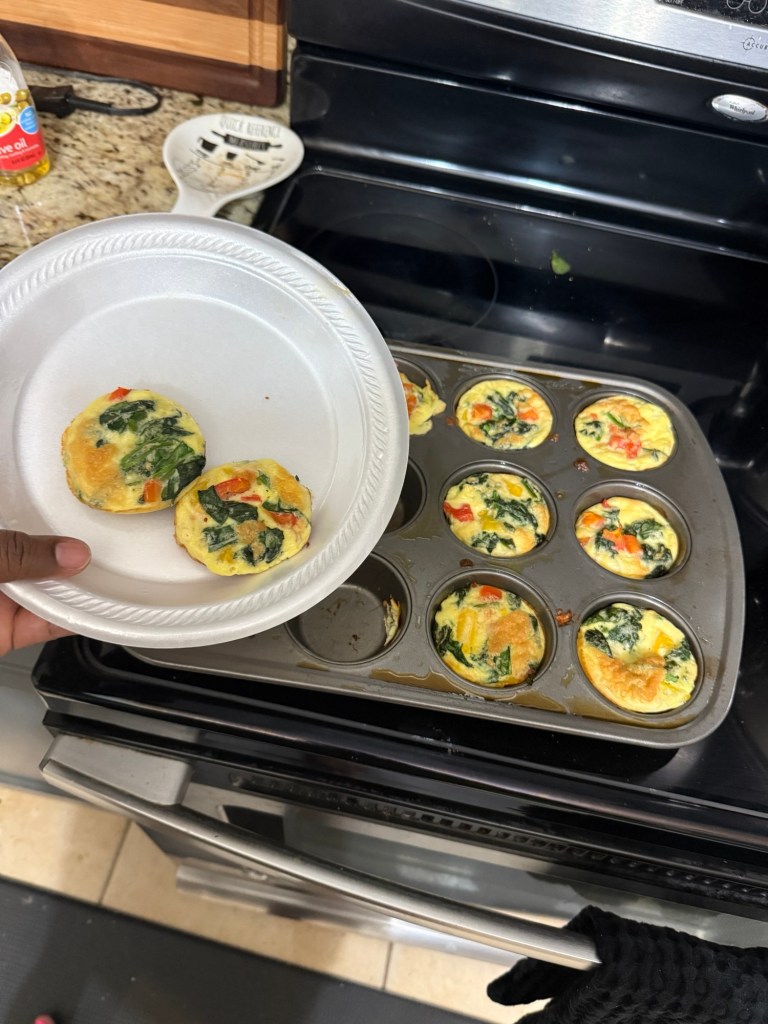
I was ingredient prepping this weekend—chopping sweet bell peppers, steaming spinach, blending eggs with cottage cheese—when an uninvited guest made an appearance. A fly started buzzing around my ingredients. Instinctively, I yelled, “Get out of my kitchen!”

That’s when it hit me.

I yelled at a fly to get out of my kitchen.

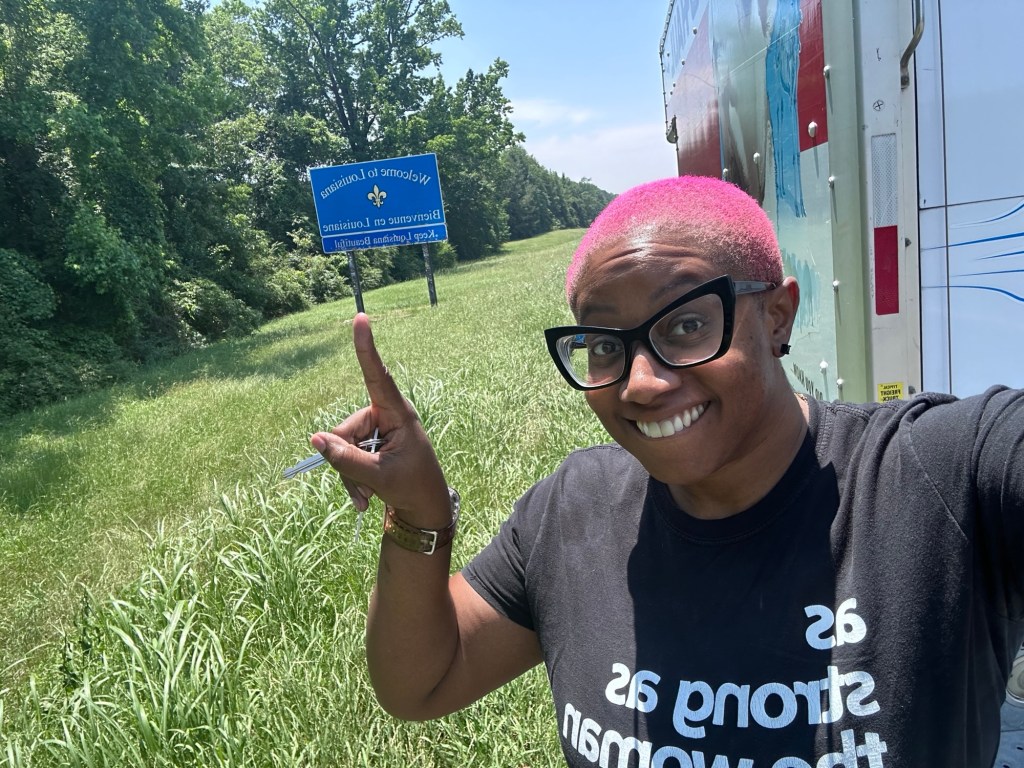
This wasn’t just any moment. This was Friday, May 16th—the one-year mark of my move back to Louisiana after nearly two decades in Dallas.

One year ago, when I returned home, I was riding a rollercoaster of emotions—hopeful, yet often deeply sad. Starting over in your 40s isn’t as simple as packing a U-Haul and driving across state lines. It’s raw. It’s humbling. It’s layered.

And the kitchen? The kitchen was my mom’s. Her space. Her rhythm. Her routines.

Sure, I scrambled eggs most mornings, but for the longest time, I had no desire to truly cook. I had spent 19 years cooking dinner almost daily for my son and me. But when I got here, something changed. I was in survival mode. I didn’t want to try new recipes or meal prep or bake for the joy of it. I tiptoed in and out of the kitchen like a respectful guest. It wasn’t mine.

But on this ordinary Friday, 365 days later, while speaking to a fly, I unknowingly claimed ownership of a space that once felt foreign.

“My kitchen.”

And when I realized what I had said, I shed a tear.

A single, grateful tear.

Because in that small moment, I realized something big:


I am home.

—DDC 🩷

Question: What’s one unexpected moment that made you realize you were exactly where you were meant to be?

Lesson: Home doesn’t always feel like home at first. Sometimes it takes time, healing, and even yelling at a fly. It feels good to be home. 

Standard
About Me, Career, Chapter 2, Mental Health, Where to?

One Year Later: A U-Haul, a New Chapter, and the Fragile Gift of Starting Over

A year ago today, I loaded up a 15-foot U-Haul with my memories, my belongings, and a heart full of hope (and fear) and drove away from the life I had built in Dallas over nearly two decades.

I didn’t know what would meet me on the other side of that drive to Gonzales, Louisiana. I just knew it was time. Time to be closer to family. Time to listen to that quiet inner nudge that kept whispering, “It’s okay to begin again.”

Today, I find myself in my feelings. Raw. Reflective. Fragile.
I’m struggling to concentrate on my HR duties, so I decided to pause and write. It’s been a while since I’ve posted—my last entry was on my birthday, November 23, 2024. I had just turned 43. A lot can happen in a year.

Since that post, life has unfolded in unexpected and beautiful ways.

I landed the job I once dreamed about—an HR Coordinator role that truly fits me. For years, I worked in recruiting and longed for something broader. I wanted to expand beyond interviews and resumes into a more holistic HR space, and I did it. My current role allows me to support employees more fully, contribute to engagement, and still flex my recruiting muscles—without it consuming my entire day. It feels like purpose and alignment found their way back to me.

Slowly but surely, I’m settling into life in Gonzales.
I have a church home that pours into my spirit.
I’ve joined a local Toastmasters club that’s helping me grow in courage and connection.
I’m meeting new people.
I’m rekindling old friendships.
I’m rebuilding a life from the ground up—and letting it look different this time.

But even with all the progress, there are days like today—quiet, emotional, and a bit heavy.
Days where I miss the familiar. Days where the cost of the move feels loud.
Where the memories from Dallas tug on my heartstrings, reminding me of what was.
Starting over is brave… and it’s also tender.

I’m learning that success and sadness can coexist. That growth often walks hand-in-hand with grief. That joy doesn’t erase the ache—it simply reminds us why we keep going.

So today, I’m giving myself grace.
To feel it all.
To celebrate the milestones.
To mourn the losses.
To rest in the middle of the journey.

If you’re reading this and you’ve started over recently—know that you’re not alone.
It’s okay to feel everything.
It’s okay to still be finding your footing.
It’s okay to be proud and sad all at once.

This isn’t the end. It’s just the one-year mark.
And I have a feeling year two will be even more powerful.

All Good Things,
DDC

Lesson: Starting over is both brave and tender—and it’s okay to feel everything that comes with it.

Question: Have you ever made a big life change — like moving, changing careers, or starting over? What helped you get through the transition?

You can leave your response on IG.

Standard